
Water fed pole window cleaning uses a brush on an extendable pole and purified water to loosen and rinse away dirt from glass, frames and sills, often from ground level. For Brisbane homeowners, landlords, property managers and commercial sites, it can reduce the need to work from ladders on suitable windows—but it is not a universal substitute for close inspection, scraping, traditional detailing or safe access planning. The right method depends on window height, glass condition, contamination, access and the finish required.
What Water Fed Pole Window Cleaning actually is
A water-fed pole system is a cleaning tool, not simply a long hose. Water travels through a hollow pole to a brush at the tip. The brush agitates the surface while the water carries loosened material away. When the water has been purified correctly, it can dry with little or no visible mineral spotting on glass.
The important distinction is between ordinary tap water delivered through a pole and pure water fed through a pole. Brisbane tap water contains dissolved minerals. When droplets evaporate, those minerals can remain as spots or a haze. A professional system therefore treats the water before it reaches the glass, then uses a controlled rinse to remove suspended dirt and cleaning residue.
What “pure water” means in practice
Pure water in this context means water with many dissolved ions removed—not water that is chemically aggressive or suitable for every cleaning situation. A common setup may use sediment filtration, carbon filtration, reverse osmosis and deionisation, depending on the incoming water and the operator’s equipment. The exact arrangement should be selected from water-quality readings and the type of work, rather than assumed from the pole length.
Water hardness is relevant because dissolved calcium and magnesium can contribute to scale and deposits. The United States Geological Survey’s explanation of water hardness describes hardness in relation to dissolved calcium and magnesium, which helps explain why untreated rinse water can leave marks after evaporation. The practical implication is simple: water quality must be checked at the point of use, not guessed from how clear the water looks in a bucket.
- Pole: carbon-fibre or composite sections provide reach while keeping the tool manageable.
- Brush: soft bristles loosen dust, cobwebs, insects and general surface grime.
- Jets: water is directed through or near the brush to wash away loosened material.
- Purification equipment: filters and resin reduce dissolved contaminants that could dry on the glass.
- Hose and controller: flow is adjusted to balance rinsing, handling and water use.
It is also worth separating the cleaning method from the access method. A pole may allow a worker to clean a second-storey window from the ground, but the worker still needs a clear work area, stable footing and control of the hose. A long pole does not make an awkward courtyard, sloping garden or busy footpath automatically safe.
Why the method matters for Brisbane homes and businesses
For a homeowner, the main benefit is access to high exterior glass without routinely placing a ladder against the building. For a landlord or property manager, the method can make recurring exterior cleaning more straightforward where windows are reachable from a driveway, path or courtyard. For a commercial property, it may help clean upper-level glazing while keeping the work process organised around entrances, customers and pedestrian areas.
That does not mean the method is always faster or better. It is strongest when the glass is reasonably maintained, the surrounding surfaces can tolerate controlled water, and the windows can be reached from a safe position. It is weaker when the job includes heavy construction debris, dried paint, greasy deposits, failing seals or glass that needs close visual inspection.
Reduced ladder dependence is a planning advantage
Work at height needs a risk assessment, even when a pole is being considered. Safe Work Australia’s working-at-heights guidance treats falls as a hazard requiring suitable controls, planning and equipment. A water-fed pole can be one control because it may allow some work to be completed from the ground, but it does not remove every height-related or site-related risk.
Queensland businesses and contractors should also consider the state-specific guidance from WorkSafe Queensland on working at heights. The decision should account for the actual window, not just the building’s number of storeys. A low window above a fragile roof may be more problematic than a higher window beside a level, unobstructed path.
For rental inspections and property sales, the benefit is often presentation rather than a technical cleaning advantage. Clean glass improves the view through a window, while clean frames and sills remove the neglected appearance that prospective tenants or buyers notice. If the property needs a broader internal and external service, see Brisbane residential window cleaning for the residential context.
It can suit recurring maintenance
Water-fed work is most predictable when used as part of a maintenance cycle. Regular exterior cleaning prevents dust, salt-laden residue, bird droppings and insect deposits from becoming a thick, bonded layer. That does not eliminate periodic hand detailing, but it can keep ordinary maintenance from becoming a restoration job.
For a body corporate or facilities manager, specify the scope rather than asking only for “high windows”. A useful brief identifies:
- which elevations and panes are included;
- whether frames, sills, screens and tracks are included;
- how entry doors and pedestrian routes will be managed;
- whether internal glass is part of the same visit;
- which stains or construction residues are excluded from routine cleaning.
Commercial premises often need a different workflow from a house. A shopping frontage may require work outside trading hours, while an office building may need a staged approach around staff and visitors. Brisbane commercial window cleaning should therefore be scheduled around access and disruption, not just pole reach.
How the system cleans glass
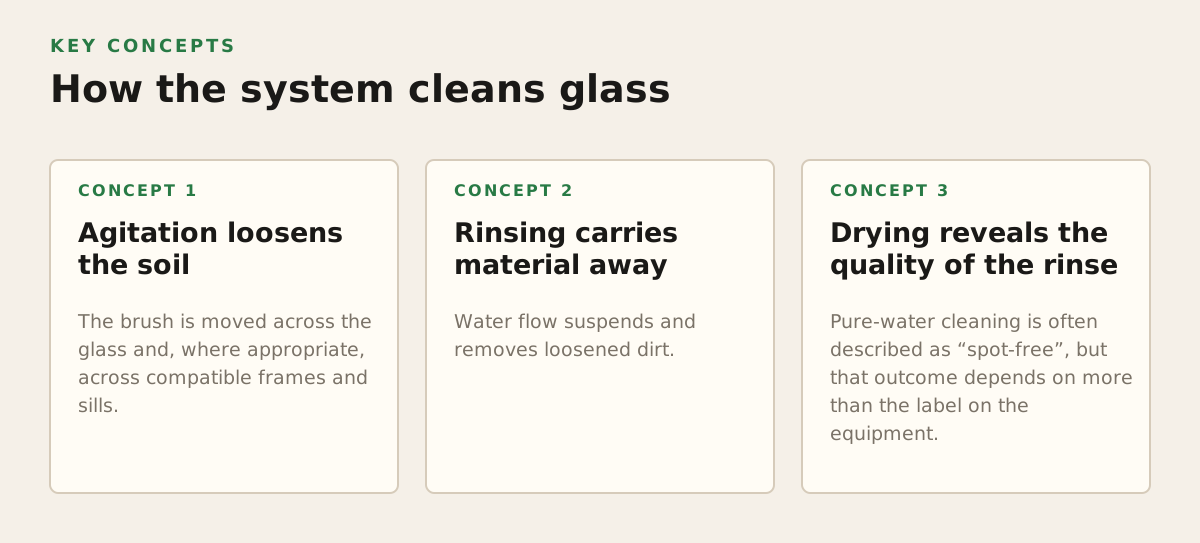
The process has several separate mechanisms. Understanding them helps a property owner judge whether a proposed method matches the condition of the windows.
Agitation loosens the soil
The brush is moved across the glass and, where appropriate, across compatible frames and sills. This breaks the bond between loose dirt and the surface. The brush should not be treated as a scraper: hard particles, paint flecks and cement residue may need a different tool and a controlled close-up method.
On ordinary residential glass, the main soils may be dust, cobwebs, insect residue and airborne pollution. On a commercial building, the mix may include grease near food outlets, hand marks around doors, traffic film and residue from nearby construction. The soil determines the method; a pole and rinse cannot safely dissolve every contaminant.
Rinsing carries material away
Water flow suspends and removes loosened dirt. The operator needs enough flow to rinse rather than merely wet the surface, but excessive flow can create runoff, splash nearby walls and make hose management more difficult. The brush and jets should be kept moving in a controlled pattern instead of flooding one section and leaving another untouched.
The final rinse is especially important. If dirty water remains on the glass, the surface may dry with marks even when the water has been purified. A disciplined operator works from clean areas toward dirtier areas, rinses frames and edges properly, and checks the glass after it begins to dry.
Drying reveals the quality of the rinse
Pure-water cleaning is often described as “spot-free”, but that outcome depends on more than the label on the equipment. Water purity, brush condition, weather, glass contamination, nearby runoff and operator technique all matter. A first clean may also expose marks that were hidden beneath a film of dirt.
Some windows need a traditional finishing step around edges, seals or stubborn deposits. Silicone contamination, old detergent residue and mineral staining can remain visible after ordinary washing. Spot-free drying is not the same as stain removal: one describes how the rinse dries, while the other may require mechanical or chemical treatment.
- Illustrative example—lightly soiled house windows: brush the glass and frames, rinse thoroughly, then inspect once the surface begins to dry.
- Illustrative example—three-storey office glazing: divide the elevation into manageable bays, protect entrances, control the hose route and document any inaccessible panes.
- Illustrative example—post-renovation glass: remove loose dust first, identify paint or cement spots, and agree on a separate restoration method before using routine pole cleaning.
- Illustrative example—solar panels: treat the panel surface as a specialist substrate, avoid abrasive contact and confirm that the proposed process suits the installation and access conditions.
Where water-fed poles break down
The most common mistake is treating a water-fed pole as a universal answer to height, staining and access. It is a tool with clear boundaries.
Heavy or bonded contamination
Dried bird droppings, tree sap, paint, render, concrete splashes and mineral scale may need soaking, targeted agitation, scraping or specialist restoration. Repeated brushing can waste time and may increase the chance of dragging abrasive particles across the glass. Tell the cleaner about renovations, nearby construction and known staining before the booking.
Glass and frame condition
Old or damaged seals can allow water into areas that were not intended to be wet. Timber frames, unsealed masonry, porous stone and deteriorated paint may also react poorly to uncontrolled runoff. Some windows have drainage paths that must remain clear; others sit above surfaces where dirty water will leave a visible trail.
Windows with external shutters, security screens, insect screens or architectural fins may be partly blocked from the brush. A pole can sometimes clean around these obstacles, but it cannot inspect the hidden glass or frame properly. Obstruction is a scope issue, not a technique failure: the quote should say what can and cannot be reached.
Weather, wind and people on site
Wind changes pole control and can move spray onto neighbouring walls, vehicles or pedestrians. Heat and direct sun can shorten the working time before water begins to dry. Rain may not prevent cleaning, but it can make inspection difficult and can immediately add new contamination to freshly cleaned exterior surfaces.
Hoses create trip and vehicle hazards around driveways, footpaths and shopfronts. Safe Work Australia separately identifies slips, trips and falls as a workplace hazard in its slips, trips and falls guidance. In practice, that means routing and protecting the hose is part of the job, not an afterthought once the glass looks clean.
- Pause or change the plan when wind makes the pole unstable.
- Use cones, barriers or a spotter where people may cross the hose route.
- Keep water away from electrical equipment and sensitive entry systems.
- Confirm that runoff will not stain walls, balconies, awnings or paving.
- Record panes that require ladder, platform or other specialist access rather than improvising.
How practitioners apply it to real property decisions
A good operator starts with a site assessment, not a promise based only on the building height. The assessment should identify window type, contamination, access, water supply, nearby surfaces and the level of finish required.
A practical decision sequence
First, define the outcome. Is the customer preparing a home for sale, returning a rental to market, maintaining an office frontage or removing a one-off building residue? “Clean glass” may include frames, tracks, screens and sills—or it may not.
Second, inspect the access. Check whether the pole can be positioned without leaning over fragile garden beds, crossing a public path or working beneath overhead obstructions. A ground-based method is only useful if the operator can stand safely and see the work area.
Third, assess the contamination. Separate routine dirt from bonded stains. If the windows have not been cleaned after construction, ask specifically about paint, render, adhesive, silicone and concrete dust. These details change the tools, time and risk.
Fourth, confirm the water plan. The operator should know whether the water will be purified on site or supplied from a prepared tank, how water quality will be checked, and how wastewater or runoff will be controlled. A clean-looking tank does not prove that the water is suitable for spot-free glass.
Finally, define inspection and exclusions. Ask how inaccessible panes, stubborn stains, screens and internal glass will be reported. A clear exclusion is more useful than silently leaving a pane unfinished.
| Property situation | Likely role for a water-fed pole | Important limitation |
|---|---|---|
| Single-storey home with clear exterior access | Routine exterior glass, frames and sills where surfaces tolerate controlled water | Interior glass, tracks and stubborn stains still need separate attention |
| Two- or three-storey home | Reach upper exterior panes from a suitable ground position | Balconies, roofs, screens and awkward corners may remain inaccessible |
| Office or retail frontage | Planned exterior maintenance with pedestrian controls | Trading hours, doors, signage and runoff may dictate the schedule |
| Post-construction glazing | Initial rinsing after loose dust is removed | Paint, render and cement contamination may require specialist restoration |
For property managers, the best instruction is usually a written scope with photographs or elevation references. That makes it easier to compare the same areas on the next visit and distinguish a missed pane from a pane that could not be safely reached.
For homeowners, ask whether the quote includes frames and sills, whether internal glass is separate, and what happens if stains remain after routine cleaning. For commercial owners, ask how pedestrian access, water runoff and out-of-hours work will be controlled. These questions are more useful than choosing a service solely because it advertises a longer pole.
When to choose this method—and when to request another one
Choose water-fed pole cleaning when the main need is safe, controlled exterior maintenance on reachable glass, particularly where upper panes can be accessed from stable ground and the surfaces are compatible with water. It is a strong candidate for recurring residential, rental, body corporate and commercial work when the scope is clear.
Request a blended approach when the property includes heavy staining, detailed edge work, internal glass, screens, tracks or panes hidden behind obstructions. A blended approach might use a pole for accessible upper glass and traditional hand tools for doors, stubborn marks and close-up finishing. The best method is often a combination, not a contest.
Before booking, provide photos or describe:
- the highest windows and how they can be reached;
- nearby trees, gardens, balconies, awnings and power equipment;
- recent building, painting or roof work;
- glass coatings, tinting, shutters or security screens;
- the required date, access window and presentation standard.
For Brisbane properties, this information lets the cleaner match equipment and workflow to the site rather than discovering the main constraint after arrival. Brisbane Window Cleaning & Solar Panel Cleaning provides residential and commercial window cleaning, gutter cleaning and solar panel cleaning across Brisbane, with online quotes and same-week bookings; start with Brisbane Window Cleaning & Solar Panel Cleaning when you want the scope assessed against the property.
Book a Brisbane window clean
Ready for a price? See our Brisbane window cleaning service for homes and commercial buildings, check window cleaning prices, or bundle it with gutter cleaning and solar panel cleaning. Call 07 2145 5260 or request a quote online.
Book a Brisbane window clean
Brisbane Window & Solar Panel Cleaning: a local team with 15+ years in Brisbane, police-checked and fully insured ($20M). Bundle any two services and save 10%.
Window cleaning Brisbane | House window cleaning | Window cleaning prices | Northside window cleaners | Call 07 2145 5260
Authored with NotFair SEO